AUTUMN FLOW

Networks

growth

Where community knowledge creates impact

Every
current
carries a voice ...

NEIHR Program

Background

The Institute of Indigenous Peoples’ Health (IIPH), conceptualized in 1999, was the first national Institute dedicated to advancing Indigenous health research in Canada. Since its establishment, IIPH has played a central role in addressing the unique health priorities of First Nations, Inuit, and Métis communities and in supporting Indigenous-led research initiatives.

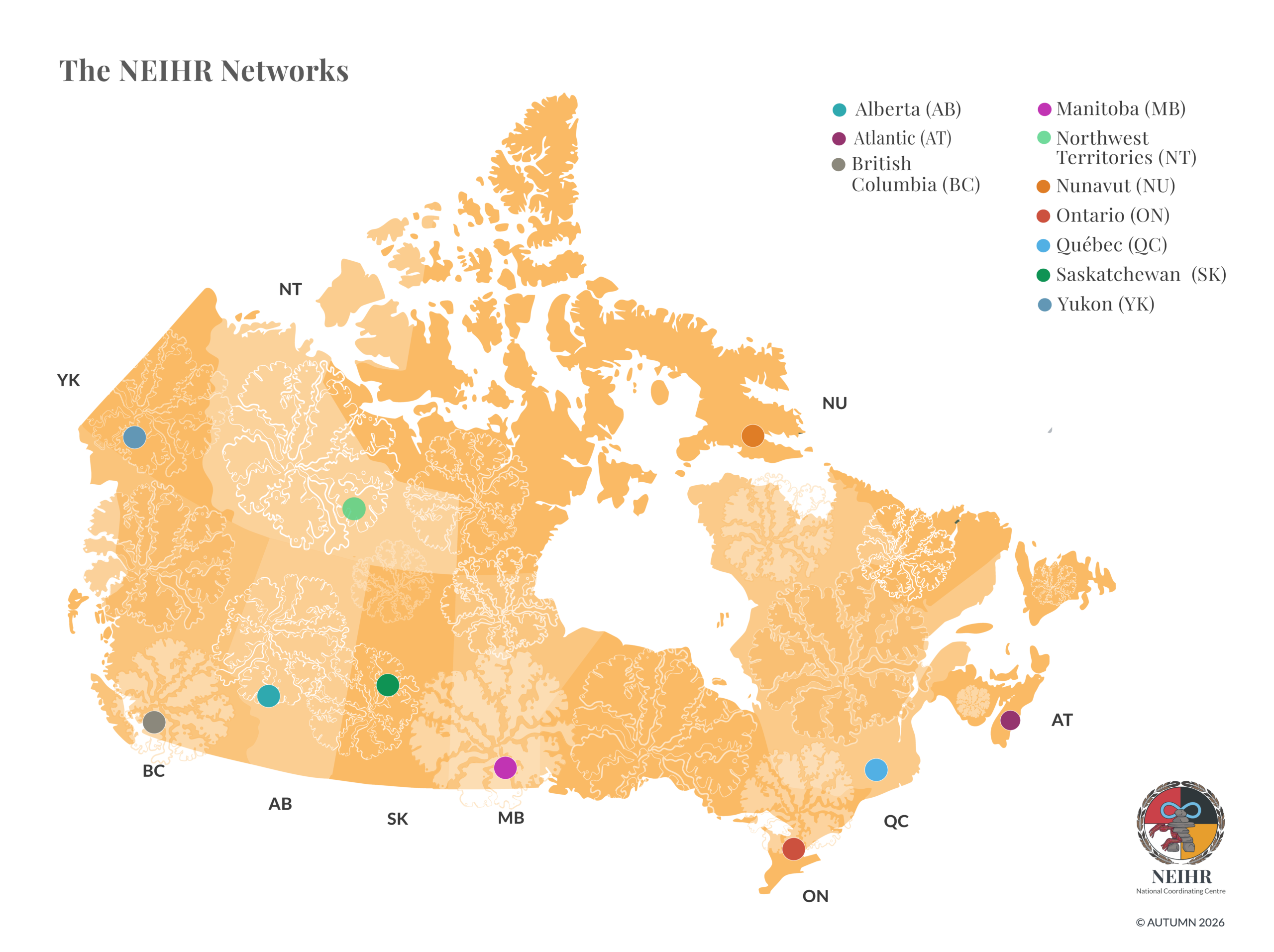
A key flagship initiative of IIPH is the Network Environments for Indigenous Health Research (NEIHR) Program, launched in 2007 under the leadership of Dr. Jeff Reading, the first Scientific Director of IIPH. The NEIHR program supports a networked, community-driven approach to Indigenous health research and mentorship across Canada, with currently 10 regional networks.  Each NEIHR network operates both independently within their region and collaboratively across the national network, while working in partnership with First Nations, Inuit, and Métis communities and non-Indigenous allies to advance research, capacity building, mentorship, and knowledge translation. The program places a strong emphasis on supporting students and emerging Indigenous scholars, including through annual national student gatherings hosted by rotating networks.

The NEIHR program represents a significant and sustained investment in Indigenous health research, with $105.5 million committed over 15 years by all 13 CIHR Institutes. This includes a federal investment of $37.6 million over the current five-year period (announced in October 2024) to support the program’s renewal and expansion. As IIPH’s flagship program, NEIHR exemplifies the importance of Indigenous-led, community-engaged research in addressing health inequities and strengthening research capacity across the country.

Alberta
Atlantic
British Columbia
Manitoba
Northwest Territories
Nunavut
Ontario
Québec
Saskatchewan
Yukon

Who is part of the network?

The NEIHRs are the rivers that shape health research territories

Why does the network matter?

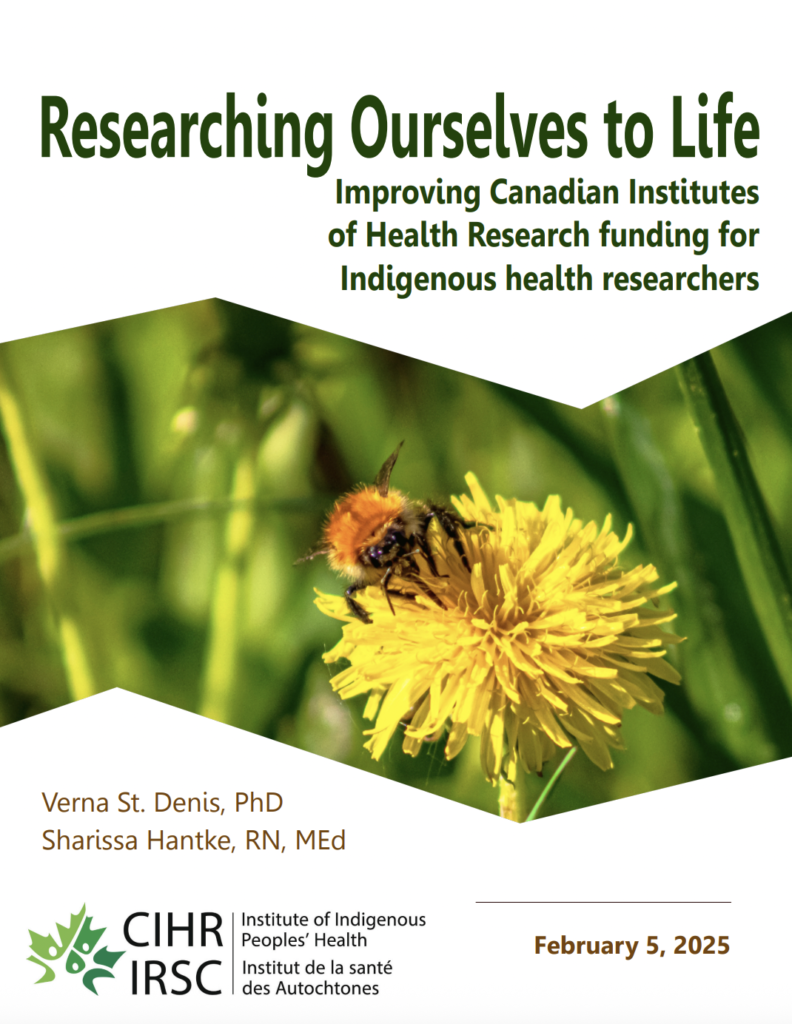
This report by Verna St. Denis and Sharissa Hantke offers a powerful and deeply researched examination of how systemic racism shapes the grant funding experiences of Indigenous health researchers in Canada. 

Commissioned by the CIHR Institute of Indigenous Peoples’ Health, the study draws on firsthand accounts to illuminate structural barriers and propose meaningful, Indigenous-informed recommendations for change. Click below to read the full report.

The NEIHRs are more than a network of regional centres—they are a living constellation of relationships that nurtures Indigenous-led research across diverse territories. Each NEIHR is deeply rooted in the cultures, priorities, and knowledge systems of the peoples it serves, while remaining connected to a larger ecosystem where learning, reciprocity, and collective purpose flow across the country.

Like rivers that retain their distinct character while nourishing the same watershed, the NEIHRs create pathways through which knowledge, mentorship, innovation, and resources travel between communities, researchers, students, and institutions. This interconnectedness strengthens local capacity while allowing promising practices, ideas, and relationships to ripple outward, enriching the entire research landscape without diminishing the uniqueness of each NEIHR.

The larger network also creates the conditions for ethical and relational research to flourish. It supports environments where Indigenous leadership is centred, where communities define the questions that matter, and where research is guided by trust, reciprocity, and accountability. In doing so, it helps transform research into a practice of shared responsibility and collective care.

Together, the NEIHRs cultivate a resilient research ecosystem where no community or researcher stands alone. By weaving together diverse strengths, perspectives, and ways of knowing, the network generates knowledge that is not only more inclusive and innovative, but also more meaningful, responsive, and capable of advancing health and wellness for present and future generations.