The Network Environments for Indigenous Health Research National Coordinating Centre stewards the flow and relationships of a living system within a network.
Vision
Support a national, Indigenous-led health research network that upholds sovereignty, self-determination, self-governance and cultural ways of knowing to foster collaboration, strengthen research capacity, and advance wholistic health and wellness for First Nations, Inuit, and Métis Peoples across generations past, present, and future.
Mission
- The NCC exists to advocate for Indigenous-led health, equity, sovereignty, and self-determination at local, national, and global levels;
- The NCC is to strengthen national and international collaborations, partnerships, and networks to support NEIHR led health research and knowledge sharing;
- The NCC upholds Indigenous worldviews and methodologies, and ways of healing that foster safe, ethical, and culturally grounded research environments;
- The NCC upholds Indigenous worldviews and methodologies, and ways of healing that foster safe, ethical, and culturally grounded research environments;
- The NCC supports the building of capacity through mentorship, training, and bridging Indigenous and non-Indigenous systems, while empowering Elders, knowledge keepers, youth, and community;
- Central to its mission, the NCC looks to protect Indigenous knowledges, advancing policy change, and addressing racism, inequities, and systemic barriers across health research and systems.
A living system of knowledge
manifesto
Knowledge is not static or linear.
It flows, adapts, and evolves.
It moves across territories,
communities, and time.
It is born from the land, grows within community, and transforms through time.
Knowledge does not belong to us.
We care for it.
We listen to it.
We allow it to flow.
We honor what came before, we hold what exists now, and we open space for what is yet to come.
Learning is sharing.
Research is relational.
Healing is a return to balance.
Knowledge is not extracted.
It is protected,
guided by the communities it comes from.
NCC
Relational
accountability
- Respect: Honouring diverse voices, perspectives, and protocols, creating space for dialogue and consensus.
- Reciprocity: Balancing teaching and learning, giving and receiving, for the benefit of communities now and into the future.
- Responsibility: Acting with foresight, accountability, and care for all our relations, the next generations, ensuring health, knowledges, and places and spaces are protected.
- Relationships: Bringing people together across communities, NEIHRs, and partners, weaving a strong web of collaboration.
- Sovereignty: Upholding Indigenous autonomy in knowledge, data, and evolving health systems and technologies, ensuring safety and self-determination.
- Identity & Wellness: Supporting the reclamation and strengthening of Indigenous identities as a foundation for wholistic health.
- Stewardship of the Land & Environment: Recognizing that human, animal, and environmental health are interconnected, and protecting the natural world as integral to Indigenous health.
- Advocacy & Systems Change: Speaking truth in spaces of power, working to transform colonial systems to reflect Indigenous values, priorities, and rights.
Knowledge
Keepers
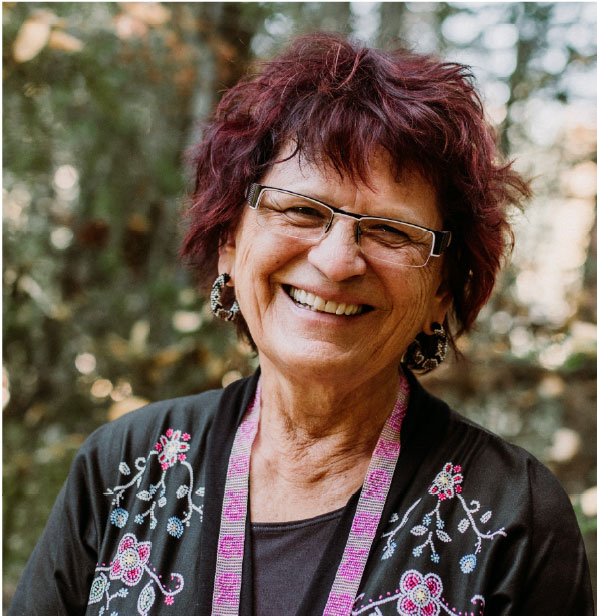
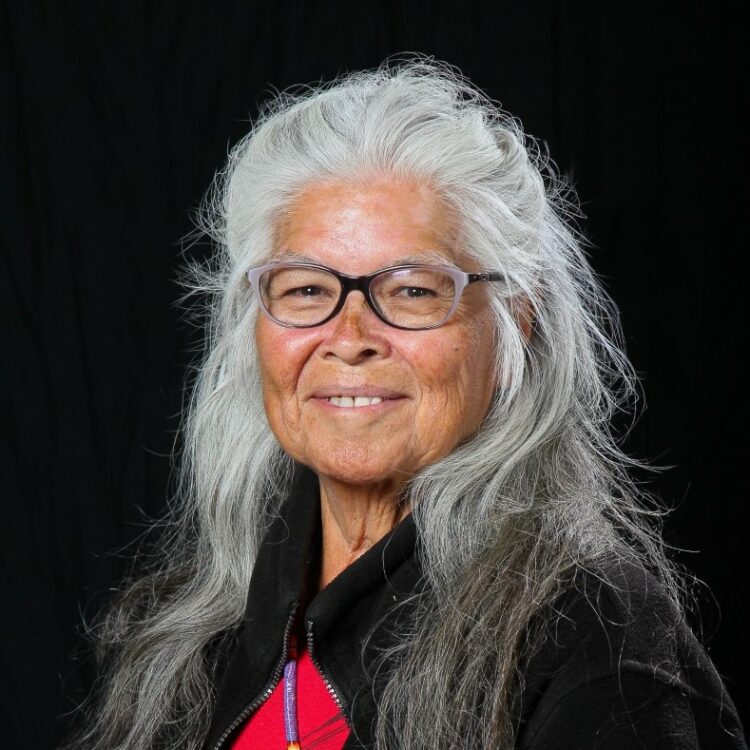
Knowledge Keeper in Residence
Terri Hansen-Gardiner
What she does?
Terri is a proud Métis woman from Île-à-la-Crosse in northern Saskatchewan: “The peacefulness. Tranquility. This is the north.”
After many years working in government, and throughout her own journey with breast cancer, Terri became a voice for those navigating the healthcare system, particularly in the area of cancer care.
Knowledge focus
Through her business, Nishtotamwin: The Act of Understanding, Terri draws on her lived experience as a cancer survivor to support Indigenous people struggling with cancer.
She speaks to many groups of people throughout the province in Cree, Northern Michif, and English, helping to move care in our communities forward and in a good way.
Publications
Knowledge Keeper in Residence
Amelia Tekwatonti McGregor
What she does?
Amelia is Kanien’kehá:ka (Mohawk) bear clan from Kahnawà:ke Unceded Territory. Trained in Social Services and Social Work, Amelia has always been involved in her community. A member of the Kahnawà:ke Combined School Committee (KSCS) from 1987 to 1992, Amelia is still involved, now chairing as the Mohawk Trail Longhouse Representative since 2015. She has been a Community Advisory Board member of the Kahnawà:ke Schools Diabetes Prevention Project (KSDPP) since its creation in 1994, as well as a member of its Research Team.
She has also been the Chairperson of the KSDPP Executive Committee for over a decade (2004-2015), and Chairperson of the Community Advisory Board since 2015. She is regularly consulted by internal and external researchers looking for guidance on ethical research with Indigenous Peoples and for her expertise in resilient communities.
Knowledge and research focus
Amelia helps researchers and facilitators adapt approaches based on the communities that they are working with through community-based participatory research and community engagement. Amelia’s knowledge and wisdom are highly valued and in 2023, Amelia was conferred an honorary doctorate from McGill University Faculty of Health Sciences in recognition of her contributions to research methodology, health promotion and community education while upholding Kanien’kehá:ka culture and identity.
Research Interests
- Knowledge and/or education
- Indigenous Health
- Type 2 Diabetes
- Health Promotion
- Research Ethics with Indigenous Peoples
- Community Engagement
- Community-Based Participatory Research
Publications
Wasyliw, D., Schaefer, L., Koch, J., McGregor, A., & Deering, P. (2020). The only thing Mohawk in the classroom was the students: A Narrative Inquiry into Physical Health Education Teacher Education in Canada. Thresholds in Education Special Issue: Critical Health Education in Critical Times: Pedagogy, Praxis, and Possibilities. (ISSN 0196-9641)
Tremblay, M.-C., Martin, D., McComber, A. M., McGregor, A., & Macaulay, A. (2018). Understanding community-based participatory research through a social movement framework: A Case study of the Kahnawake Schools Diabetes Prevention Project. BMC Public Health, 18 (1), 487. doi:10.1186/s12889-018-5412-y
Macaulay, A., Ing, A., Salsberg, J., McGregor, A., Saad-Haddad, C., Rice, J., Montour, L., & Gray-Donald, K. (2007). Community-based Participatory Research: Lessons from Sharing Results with the Community: Kahnawake Schools Diabetes Prevention Project. Progress in Community Health Partnerships: Research, Education, and Action, 1 (2), 143-152. doi: 10.1353/cpr.2007.0010
Stewards
NCC LEAD
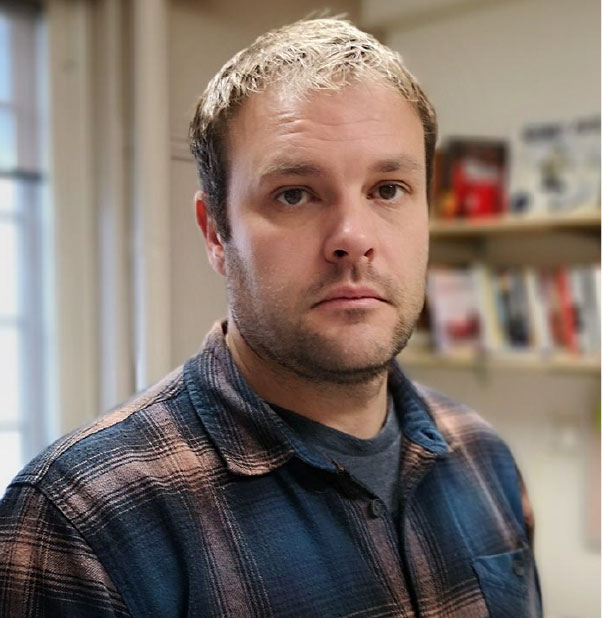
Robert Henry, PhD
rob.henry@usask.ca
What he does?
Robert Henry is Métis and a citizen of the Métis Nation-Saskatchewan, from Prince Albert, SK, and holds a Canada Research Chair in Indigenous Justice and Wellbeing. He leads the National Coordinating Centre of the Network Environments for Indigenous Health Research (NCC-NEIHR) which focuses on mentorship, training, and research of Indigenous and non-Indigenous health researchers and bridging capacity with Indigenous communities.
- Canada Research Chair in Indigenous Justice and Wellbeing
- Associate Professor, Department of Indigenous Studies, University of Saskatchewan
- Lead of National Coordinating Centre for Network Environments for Indigenous Health Research Networks
- Nominated Principal Investigator – Indigenous Engagement Platform for Canadian Research Initiative in Substance Misuse (CRISM)
Research focus
Working with Indigenous ex-gang members and collecting life narratives using visual research methods, he examines how their notions of identity are impacted with their involvement within and across multiple social systems. Through this work he has published two manuscripts with Indigenous gang and ex-gang members – Brighter Days Ahead (2013) and Indigenous Women and Street Gangs: Survivance Narratives (2021), and co-edited four other books on Indigenous health, settler colonialism, and Indigenous sociology.
He has published in the areas of Indigenous methodologies, arts-based research, Indigenous criminology, prison cultures, and Métis data sovereignty.
Publications
Working with Indigenous ex-gang members and collecting life narratives using visual research methods, he examines how their notions of identity are impacted with their involvement within and across multiple social systems. Through this work he has published two manuscripts with Indigenous gang and ex-gang members – Brighter Days Ahead (2013) and Indigenous Women and Street Gangs: Survivance Narratives (2021), and co-edited four other books on Indigenous health, settler colonialism, and Indigenous sociology.
He has published in the areas of Indigenous methodologies, arts-based research, Indigenous criminology, prison cultures, and Métis data sovereignty.
Research Manager
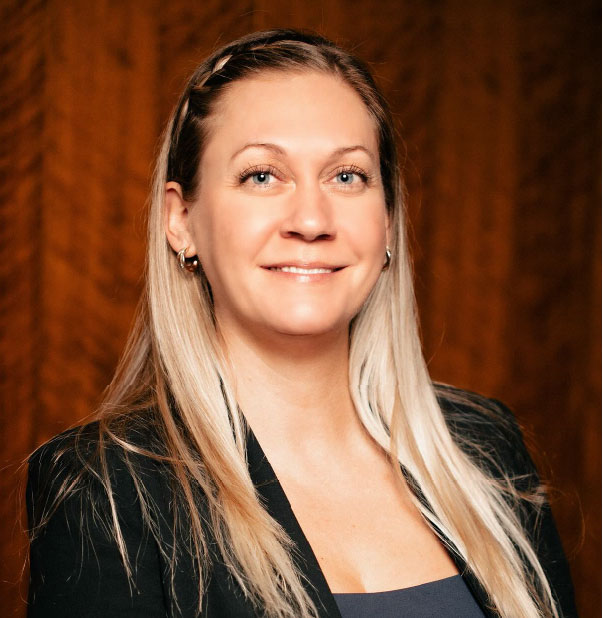
Tara Erb
tara.erb@usask.ca
What she does?
Tara is of mixed Moose Cree First Nation from Moose Factory and French European ancestry and grew up in Toronto, Ontario. She completed her Bachelor of Arts in Sociology at the University of Victoria (UVic) and a Master of Arts in Sociology (UVic), with a research focus on facilitating Indigenous cultural safety and anti-racism training.
Tara is currently completing her PhD in the Faculty of Health Sciences at Simon Fraser University with a research focus on Indigenous Cultural Safety in Research Environments/Structures, specifically distinctions-based ethics and ethical processes.
Research focus
Her research interests include: Indigenous health and wellness Indigenous cultural safety, anti-Indigenous racism and social theory, and environmental rapid response.
Publications
Peer Reviewed Journal Articles
Stelkia, K., Erb, T., Barry, J., Botterill, L. & Manshadi, A. (2026). “Experiences and impact of Indigenizing health research systems in British Columbia, Canada: A thematic analysis of the British Columbia Network Environment of Indigenous Health research survey”. The International Indigenous Policy Journal, 17(1) (“in
press”)
Stelkia, K., Erb, T., Botterhill, L. & Barry, J. (2026). “From capacity-building to capacity-bridging: Indigenous Health Research Facilitators as a strategic intervention to bridge Indigenous communities capacities in the British Columbia health research environment”. AlterNative: An International Journal of Indigenous Peoples, 0(0).
https://doi.org/10.1177/11771801251409186
Erb, T., Barry, J. & Stelkia, K. (2026). “Supporting Indigenous self-determination through institutional readiness for change: Indigenous cultural safety considerations for research administration from the British Columbia Network Environment for
Indigenous Health Research”. AlterNative: An International Journal of Indigenous Peoples, 22(1), 134-143. https://doi.org/10.1177/11771801251412977
Erb, T., Garcia, J. & Stelkia, K. (2025). “Relational systems and the principles of self-determination, reciprocity and mutual benefit: Enacting Indigenous ways of knowing in the evaluation of a provincial Indigenous health research network in British Columbia, Canada”. Canadian Journal of Program Evaluation 39(3). https://doi.org/10.3138/cjpe-2024-0036
Barry, J., Erb, T. & Stelkia, K. (2024). Indigenous communities, collectives and
organizations advancing decolonizing methodologies: perspectives from British
Columbia Network Environment for Indigenous Health Research in Canada.
Qualitative Research Journal. https://doi.org/10.1108/QRJ-03-2024-0071
Erb, T., Stelkia, K., Hancock, R., Sims, D., Adams, E., Caron, N. & Reading, J.
(2024). Supporting Indigenous graduate student health research capacity: Mentorship through a provincial health research network environment in British
Columbia, Canada. International Journal of Indigenous Health, 20(1): 1-11.
https://doi.org/10.32799/ijih.v20i1.42216
Erb, T. & Stelkia, K. (2023). Best practices to support the self-determination of Indigenous communities, collectives, and organizations in health research through a provincial health research network environment in British Columbia, Canada.
International Journal of Environmental Research and Public Health, Special Issue: First Nations’ Health and Wellbeing Promotion: Within and beyond Health Systems, 20(15), 6523; https://doi.org/10.3390/ijerph20156523
Erb, T. L., & Loppie, C. (2023). The cost of Indigenous cultural safety training: examining facilitator burnout and the impacts on health and wellness. AlterNative: An International Journal of Indigenous Peoples, 19(2), 417–425.
https://doi.org/10.1177/11771801231168140
Smith, A.P., Kampen, R., Erb, T., McDonald, S., Sheets, D. (2022). Choral singing and dementia: Exploring musicality as embodied and relational accomplishment.
Journal of Aging Studies, 63(2022). https://doi.org/10.1016/j.jaging.2022.101077
Whitinui, P., Skip Dick, Hancock, R., Allan, B., Loppie, C., Erb, T., Duerksen, R., Baldwin, C. (2021). Between the tides: Developing an Indigenous-informed cultural safety training impact assessment survey tool for post-secondary institutions on Vancouver Island, BC. Journal of Contemporary Issues in Education, 16(2): 55-83.
https://journals.library.ualberta.ca/jcie/index.php/JCIE/article/view/29454
Conference Publications
Smith, A.P., Sheets, D., Kennedy, M., Erb, T., Kampen, R., Berkan Hozempa, C. & MacDonald, S. “The emergence and benefits of social relationships in two
community-based dementia choirs” (abstract). Gerontological Society of America (GSA) Annual Scientific Meeting, “Disruption to Transformation: Aging in the ‘new normal'”, November 10-12, 2021. Online. https://doi.org/10.1093/geroni/igab046.496
Smith, A.P., Erb, T., Kampen, R., MacDonald, S. & Sheets, D. “Choral singing with dementia: Examining the experience and impact of embodied and relational musical performance” (poster). Alzheimer’s Association International Conference, July 27-31,
2020. Online. https://doi.org/10.1002/alz.047696
Other Non-Peer Reviewed Publications
Erb, T. & Henry, R. (2026). “NEIHR Research Matrix Report: Directions 1”.
Published by the NEIHR NCC (Network Environments for Indigenous Health
Research National Coordinating Centre).

Research Financial Officer
Tammy Popova, MA
tammy.popova@usask.ca
What she does?
Tammy is an Indigenous woman from the Northeastern part of Russia.
She has a Bachelor’s in Commerce from Northeastern Federal University in her hometown Yakutsk, a Bachelor of Northern Studies from the University of Tromso (Norway), and a Masters in Northern Governance and Development from the University of Saskatchewan.
Tammy handles daily administration and financial management for the NEIHR National Coordinating Centre.
founders
and
partners
The Canadian Institutes of Health Research (CIHR) Institute of Indigenous Peoples’ Health (IIPH), led by Scientific Director Dr. Chelsea Gabel, advances Indigenous health and wellness through research grounded in the priorities, knowledges, values, and self-determination of First Nations, Inuit, and Métis Peoples.
The Network Environments for Indigenous Health Research (NEIHR) Program is IIPH’s flagship initiative, supported by all 13 CIHR Institutes. The program strengthens Indigenous-led and community-driven health research across Canada by supporting research capacity, mentorship, knowledge sharing, and meaningful partnerships between Indigenous communities and research institutions.
Dr. Gabel, a Red River Métis scholar and former co-lead of the NEIHR National Coordinating Centre, brings extensive experience in Indigenous health research, community engagement, and research governance. Under her leadership, IIPH continues to strengthen relationships across the NEIHR network and the broader Indigenous health research environment, supporting Indigenous leadership and community priorities in shaping the future of health research in Canada.


The CIHR Institutes
There are 13 Health Research Institutes that support the NEIHR program (2019–2034), reflecting a commitment to integrating Indigenous health research across all areas of health research.
evaluations
and
reports
Discover how we evaluate our efforts and how we approach accountability